Within AP Inquiry
Why Famous Labs Make Rumors Feel Stronger
Names like NASA JPL and Los Alamos made weak links sound stronger when online posts blurred place, role and clearance.
On this page
- How institution names shaped the narrative
- Role, clearance and affiliation differences
- When a connection is meaningful
Page outline Jump by section
Introduction
One of the most effective shortcuts in the 2026 “missing scientists” narrative was not a particular piece of evidence but the repeated invocation of famous research institutions. Names such as NASA’s Jet Propulsion Laboratory (JPL), Los Alamos National Laboratory and other high-profile government research organisations carried powerful associations with classified work, national security and advanced technology. As individual cases were grouped together online, those institutional names often became stand-ins for claims about secret knowledge, even when the people involved had very different jobs, levels of access and circumstances. This mechanism helps explain why unrelated incidents could appear to form a coherent pattern despite the absence of public evidence demonstrating a coordinated campaign.[CBS News]Is there independent evidence linking separate cases beyond the institutional name?Open source on cbsnews.com.
How institution names shaped the narrative
Well-known scientific institutions occupy a distinctive place in the public imagination. Laboratories associated with nuclear weapons, space exploration or defence research naturally evoke secrecy because parts of their work are genuinely classified. Rumours can therefore borrow credibility simply by attaching themselves to recognised institutional brands.
In the online discussion surrounding the alleged pattern of missing or dead scientists, references to institutions frequently replaced discussion of individual evidence. Rather than examining each case independently, posts often highlighted that someone had worked at “JPL”, “Los Alamos” or another sensitive facility, encouraging readers to infer a common explanation.
Several factors reinforced this effect:
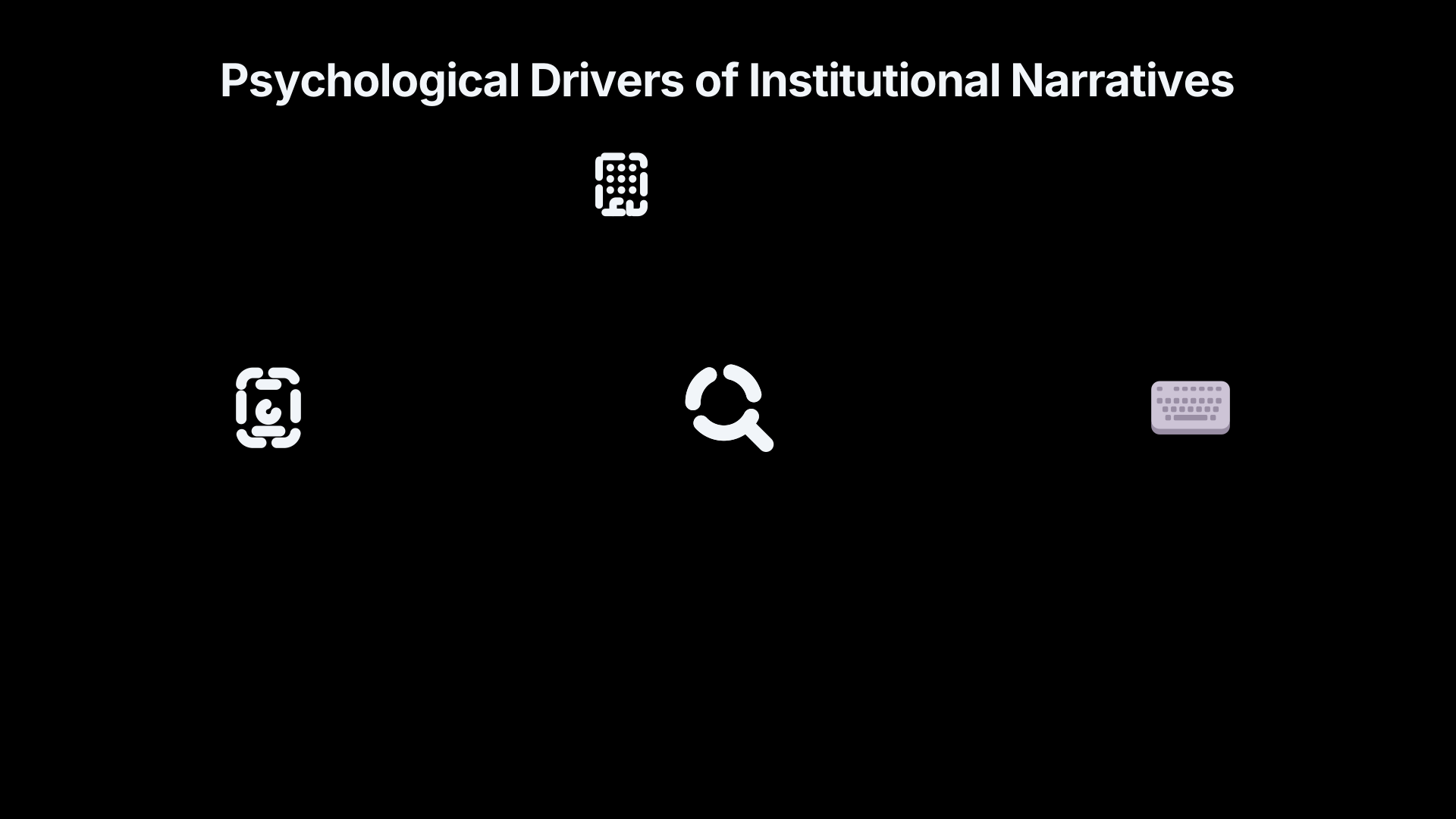
- Institutional prestige. Famous laboratories already possess reputations for cutting-edge research and government work.
- Public awareness of classified programmes. Because some work at these facilities is secret, audiences may assume that any employee possessed highly sensitive information.
- Pattern recognition. Repetition of the same institutional names across multiple social-media posts makes unrelated events appear statistically unusual even when they occurred years apart.
- Narrative compression. “Worked at Los Alamos” is easier to repeat than the detailed circumstances of an individual’s employment, retirement or personal life.[cbsnews.com]Is there independent evidence linking separate cases beyond the institutional name?Open source on cbsnews.com.
Importantly, none of these features establishes that separate cases are connected. They explain why certain names became persuasive rhetorical cues.
Role, clearance and affiliation differences
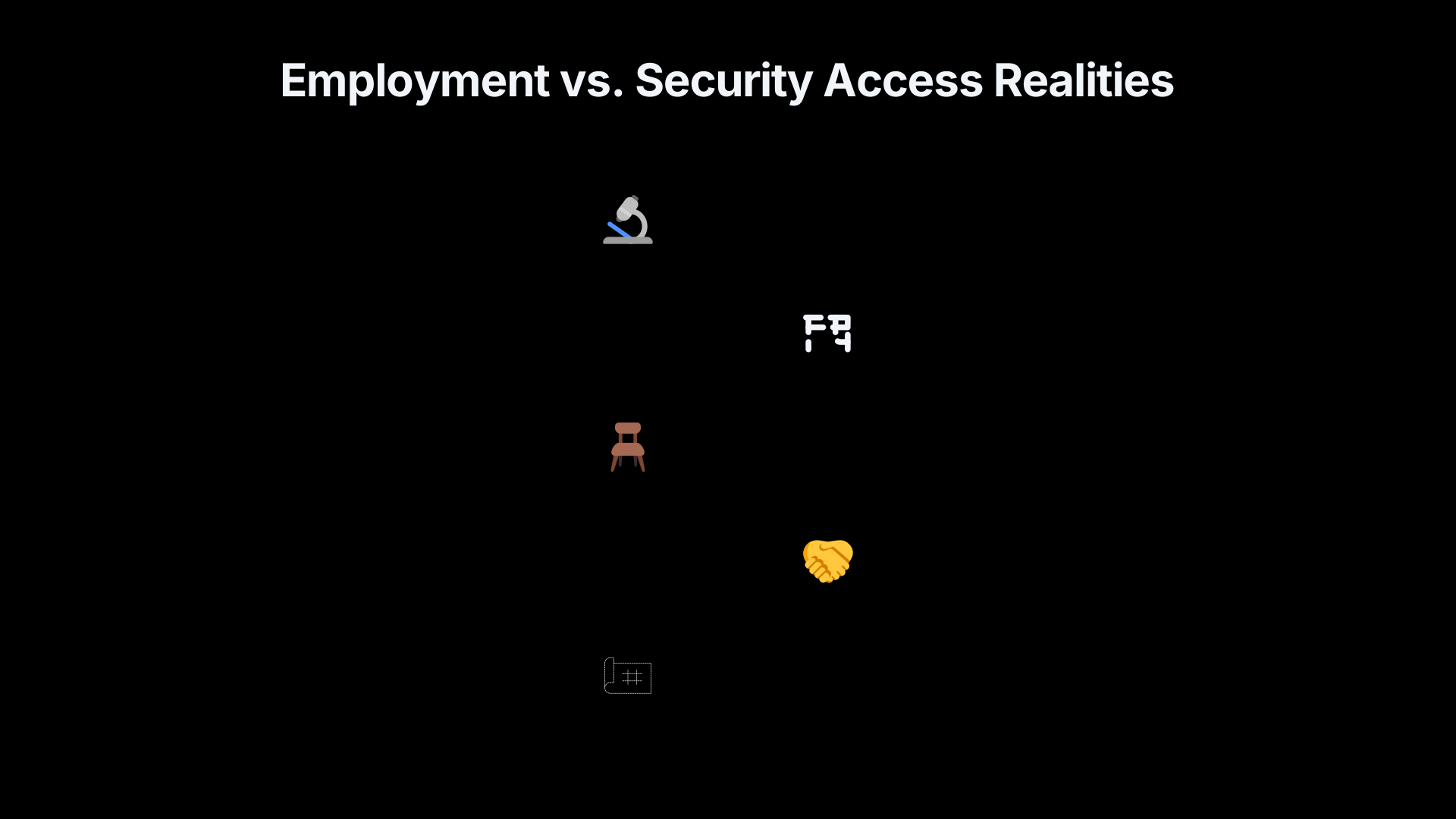
A recurring weakness identified by journalists examining the claims was the tendency to blur important distinctions between employment, professional role and security access.
The grouped lists included people whose connections to sensitive institutions differed substantially. Some were active researchers, others were engineers, contractors, administrative staff or retirees. Some had left their organisations years earlier. Others were connected through universities or contractors rather than direct employment.
These distinctions matter because employment at a famous laboratory does not automatically imply access to highly classified programmes.
Examples repeatedly discussed in reporting include:
- Individuals associated with NASA’s Jet Propulsion Laboratory whose work ranged across different scientific and engineering disciplines rather than a single classified project.
- Employees linked to Los Alamos National Laboratory whose responsibilities included administrative or support functions rather than weapons design or advanced research.
- Retired personnel whose security clearances had expired or become routine long before the events in question.[cbsnews.com]Is there independent evidence linking separate cases beyond the institutional name?Open source on cbsnews.com.
Reporting on the disappearance of retired Air Force General William Neil McCasland illustrates this point. Although online discussions portrayed him as possessing extraordinary classified knowledge, his wife publicly stated that, after many years in retirement, he held only ordinary post-retirement clearances and rejected claims that he was targeted for decades-old secrets. Authorities likewise reported no evidence of foul play in the disappearance at that stage.[Wikipedia]WikipediaMissing scientists conspiracy theoryMissing scientists conspiracy theory
The difference between having once worked in a sensitive environment and currently possessing unique classified information is frequently lost when institution names become the primary focus.
Why famous laboratories encourage overgeneralisation
Psychologically, recognised institutions function as credibility shortcuts.
Most readers know little about the internal organisation of laboratories such as JPL or Los Alamos. As a result, they may unconsciously treat every employee as participating in the institution’s most famous activities.
In reality, large research organisations resemble major universities or multinational companies:
- thousands of employees;
- many scientific disciplines;
- administrative, technical and operational staff;
- varying security requirements;
- projects ranging from entirely public to highly restricted.
Consequently, two people sharing an employer may have had no professional relationship, no common research area and dramatically different levels of access.
This organisational complexity is largely invisible in simplified online narratives, where the institution itself becomes the apparent connecting thread rather than demonstrable operational links between individuals.[CBS News]Is there independent evidence linking separate cases beyond the institutional name?Open source on cbsnews.com.
When an institutional connection is actually meaningful
An institutional affiliation is not irrelevant. In investigations involving espionage, insider threats or industrial sabotage, workplace connections can be important evidence.
However, investigators generally look for much stronger indicators than a shared employer, including:
- overlapping projects;
- documented professional collaboration;
- common supervisors or departments;
- shared access to particular facilities;
- communication records;
- financial or operational links;
- corroborating forensic evidence.
Simply appearing on a list of people who once worked for respected scientific organisations is insufficient to establish that separate incidents stem from a common cause.
Coverage by the Associated Press, CBS News and other outlets consistently distinguished between acknowledging that several cases involved sensitive institutions and concluding that the cases were operationally connected. Officials examining the incidents emphasised that, while inquiries were appropriate, they had not identified evidence demonstrating a coordinated campaign linking all of the reported deaths and disappearances.[cbsnews.com]Is there independent evidence linking separate cases beyond the institutional name?Open source on cbsnews.com.
Why this mechanism matters for evaluating rumours
The “institution cue” mechanism illustrates how conspiracy narratives can become persuasive without requiring fabricated facts. Many of the underlying facts—employment histories, laboratory affiliations and individual disappearances or deaths—were genuine. The leap occurred when those facts were rearranged so that institutional prestige substituted for evidence of coordination.
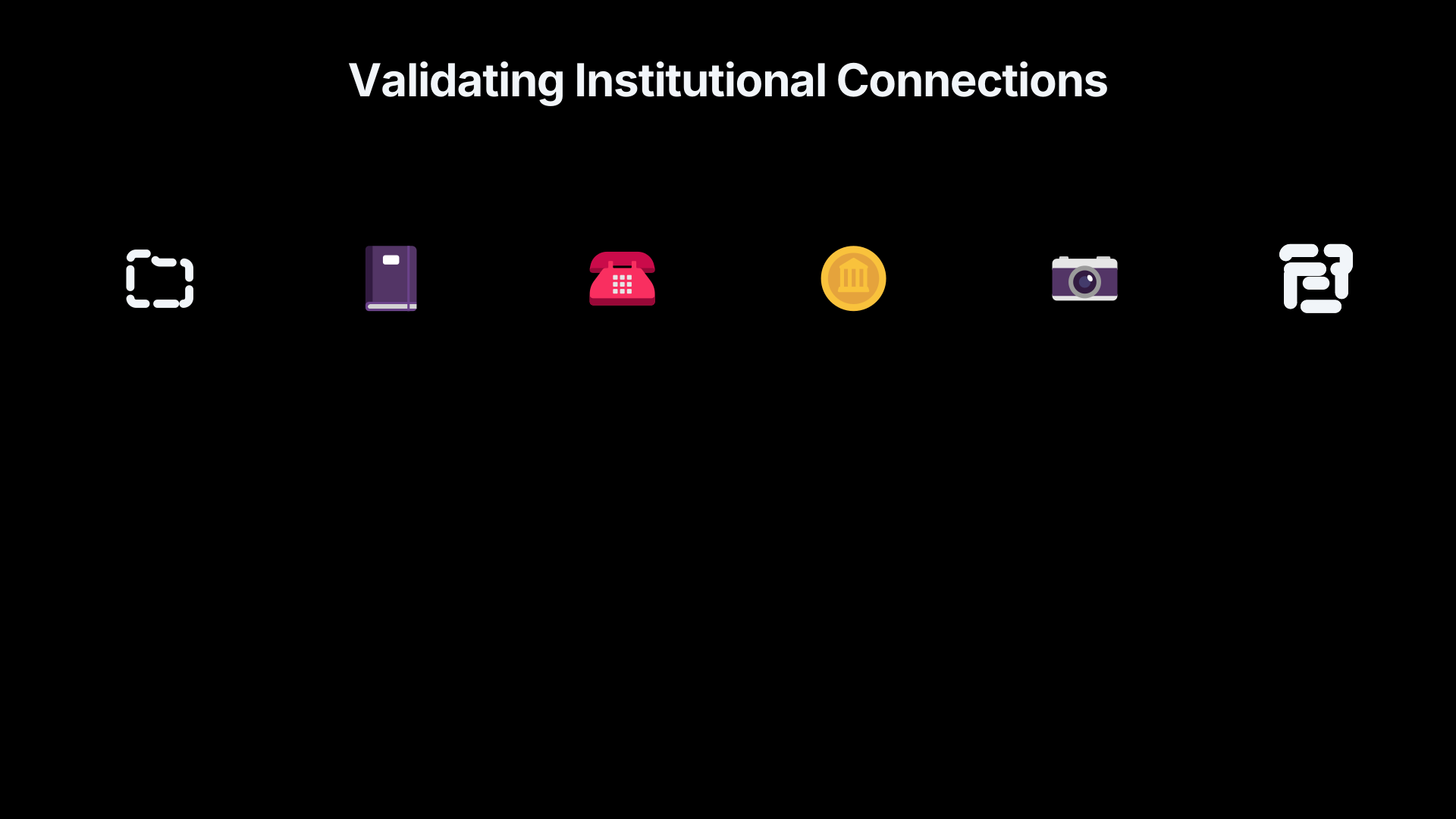
Readers evaluating similar claims can separate three distinct questions:
- Did the person really work for the institution? This is often verifiable.
- What was that person’s actual role and level of access? This frequently proves more varied than social-media summaries suggest.
- Is there independent evidence linking separate cases beyond the institutional name? This is the crucial question, and one that reporting on the 2026 scientist-rumour episode repeatedly found remained unanswered in the public record. CBS News+2Snopes
Amazon book picks
Further Reading
Books and field guides related to Why Famous Labs Make Rumors Feel Stronger. Use these as the next step if you want deeper reading beyond the article.
Escaping the Rabbit Hole
Addresses reasoning errors and the appeal of claims involving secret programs and famous organizations.
Suspicious Minds
Directly examines why institutional associations and hidden-agenda narratives gain traction.
The Demon-Haunted World
Rating: 4.5/5 from 43 Google Books ratings
Explains why authority, prestige and cognitive biases can make weak claims seem convincing.
Calling Bullshit
Provides tools for evaluating evidence rather than relying on reputation or institutional prestige.
eBay marketplace picks
Marketplace Samples
Live-tested eBay searches with available results related to this page.


Endnotes
1.
Source: snopes.com
Title: scientists dead missing
Link:https://www.snopes.com/news/2026/04/28/scientists-dead-missing/
Source snippet
Did 11 US scientists connected to sensitive research die or...28 Apr 2026 — The rumor gained traction after an April 2, 2026, Fox News r...
Published: April 2, 2026
2.
Source: Wikipedia
Title: Missing scientists conspiracy theory
Link:https://en.wikipedia.org/wiki/Missing_scientists_conspiracy_theory
4.
Source: nbcwashington.com
Title: conspiracy theories missing dead scientists [white house]({{ ‘white-house/’ | relative_url }})
Link:https://www.nbcwashington.com/news/national-international/conspiracy-theories-missing-dead-scientists-white-house/4096258/
Source snippet
scientists who have died or disappeared in recent years was largely confined to niche online...
5.
Source: theatlantic.com
Title: missing scientists
Link:https://www.theatlantic.com/science/2026/04/missing-scientists/686885/
Source snippet
Forget Nancy Guthrie, they said. Here...Read more...
Additional References
6.
Source: oversight.house.gov
Title: comer burlison seek information on missing nuclear and rocket scientists
Link:https://oversight.house.gov/release/comer-burlison-seek-information-on-missing-nuclear-and-rocket-scientists/
Source snippet
& Burlison Seek Information on Missing Nuclear and...20 Apr 2026 — Public reports raise questions about a possible sinister connection b...
7.
Source: wsj.com
Link:https://www.wsj.com/politics/national-security/how-a-fringe-conspiracy-theory-about-missing-scientists-got-the-fbis-attention-d61de97c
Source snippet
The case of Melissa Casias, a New Mexico administrative assistant gone missing, became a flashpoint, with internet theorists linking her...
8.
Source: coloradopolitics.com
Link:https://www.coloradopolitics.com/2026/04/20/what-we-know-about-nearly-a-dozen-scientists-who-went-missing-died-or-were-murdered/
Source snippet
What we know about nearly a dozen scientists who went...20 Apr 2026 — Anthony Chavez, who disappeared in 2025 at age 78, worked for deca...
9.
Source: newsweek.com
Title: wave of missing or dead us scientists everything we know 11867967
Link:https://www.newsweek.com/wave-of-missing-or-dead-us-scientists-everything-we-know-11867967
Source snippet
Wave of Missing or Dead US Scientists: Everything We Know23 Apr 2026 — Reports have also referenced other individuals connected to NASA's...
10.
Source: instagram.com
Title: What’s going on with all of these missing scientists?
Link:https://www.instagram.com/reel/DXg3mesPRfl/?hl=en
Source snippet
#nasa...Melissa Casias, she has been missing since last summer. She worked at Los Alamos National Lab, she had an administrative role bu...
11.
Source: aol.com
Title: lawmakers seek answers individuals tied 191909000
Link:https://www.aol.com/articles/lawmakers-seek-answers-individuals-tied-191909000.html
Source snippet
Lawmakers seek answers on individuals tied to US...20 Apr 2026 — "Others who are missing or deceased include individuals affiliated with...
12.
Source: youtube.com
Link:https://www.youtube.com/watch?v=zCWahgV-Gfg
Source snippet
Missing scientists: No projectiles found in Melissa Casias' skull: police | Elizabeth Vargas Reports...
13.
Source: thenationaldesk.com
Link:https://thenationaldesk.com/news/fact-check-team/fact-check-team-white-house-vows-to-investigate-deaths-and-disappearances-of-scientists-lawmakers-federal-investigators
Source snippet
Fact Check Team: White House vows to investigate deaths...20 Apr 2026 — Monica Reza — Scientist at NASA Jet Propulsion Laboratory; repor...
14.
Source: facebook.com
Link:https://www.facebook.com/NewsNationNow/posts/ten-scientists-who-are-missing-or-dead-have-connections-to-government-research/975323204874697/
Source snippet
(April 20–22, 2026): Michael David Hicks (59, NASA Jet Propulsion...
15.
Source: facebook.com
Link:https://www.facebook.com/Newsweek/posts/several-missing-scientists-with-advanced-research-ties-have-drawn-congressional-/1319428500057591/
Source snippet
Several missing scientists with advanced research ties...Since 2022, reports have been circulating about a disturbing series of events i...
Topic Tree